

Learn
What is Body Composition?
Body composition is a method of describing what the body is made of. It provides a much more accurate depiction of health and description of weight than BMI. In InBody, the molecular method is used to quantify the four main body components of body water, protein, minerals and body fat.

Water
Edema
Water is the largest component of the human body, making up approximately 50-70% of total body weight. The water can be found in our muscles, cells, blood and other bodily fluids. Body water is vital for maintaining overall health and functionality and some of its key roles include transportation of nutrients, waste removal, temperature regulation and joint lubrication.
Protein
Sarcopenia
Protein is a major component of body tissues such as muscles, organs and bones. Lack of protein could indicate low muscle mass and poor nutritional status.
Mineral
Osteoporosis
Minerals are inorganic substances that are essential in many bodily functions. Minerals found inside the bones are osseous minerals and minerals found in all other parts of the body are known as non-osseous minerals. Lack of minerals can lead to risks of poor growth, fractures and osteoporosis.
Fat
Obesity
Body fat is one of the components that make up the human body and is a warehouse that stores energy. Excess amount of body fat may cause obesity and metabolic syndromes. Severe lack of body fat may cause a decrease in immunity level and imbalance in hormones, so it is important to maintain a proper level of body fat.
Why Is It Important to Measure Body Composition?
Understanding body composition is crucial for optimal health and wellness. While many focus solely on weight changes, it’s essential to recognize that individuals with the same weight can have different body compositions.
By measuring body composition, you gain insights into lean muscle mass, body fat distribution, and overall wellness. This information empowers you to tailor your efforts for improvement effectively. Rather than relying solely on scale numbers, assessing body composition provides a comprehensive understanding of your health. It serves as a roadmap for setting realistic goals and tracking progress accurately, leading to a healthier, more balanced physique and overall well-being.
Methods of Body Composition Analysis

Bioelectrical Impedance Analysis (BIA)
Bioelectrical Impedance Analysis (BIA) is a method of measuring impedance by applying alternating electrical currents to a subject to measure their volume of water through impedance values. BIA is a non-invasive, quick, and cost-effective method that offers real-time, user-friendly data on body composition, making it easy to use, widely applicable, and ideal for tracking progress over time without exposure to radiation. This non-invasive method involves the placement of electrodes on a person’s feet, hands, or both. A low-level electrical current is sent through the body, and the flow of the current is affected by the amount of water in the body. BIA devices measure how this signal is impeded through different types of tissue (muscle has high conductivity but fat slows the signal down). As BIA determines the resistance to flow of the current as it passes through the body, it provides estimates of body water from which body fat is calculated using selected equations.

Dual Energy X-Ray Absorptiometry (DEXA)
DEXA (Dual-Energy X-ray Absorptiometry) is a highly accurate imaging technique used to measure bone density, body fat, and muscle mass. During a DEXA scan, the patient lies down on a scanning table while the device uses two different X-ray beams to differentiate between bone and soft tissue. This allows for precise measurement of bone mineral content (BMC), lean mass, and fat mass. The scan typically takes about 10 to 20 minutes, and it involves minimal radiation exposure. While the traditional DEXA model focuses on bone and soft tissue, advanced DEXA machines and software can provide a detailed analysis using a 3-compartment model, distinguishing between bone, fat, and lean mass. DEXA is considered one of the most accurate methods for assessing body composition, with a low error margin compared to other methods.
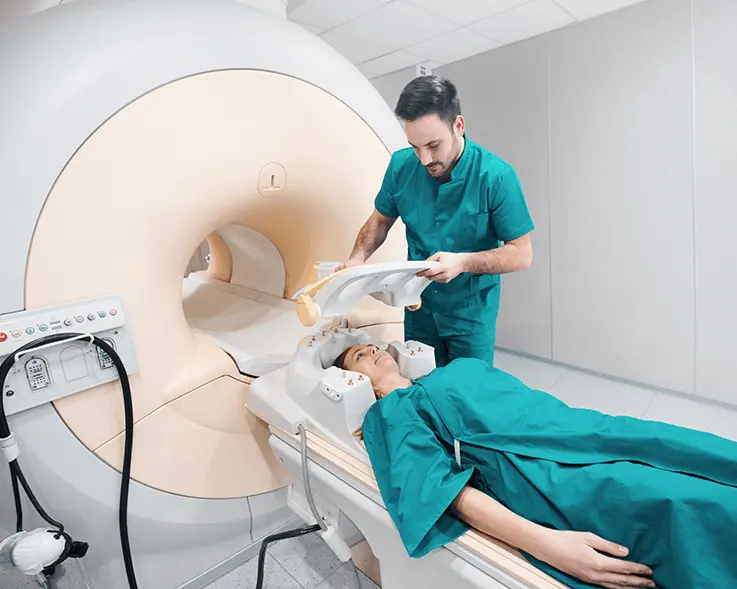
MRI (Magnetic Resonance Imaging)
Magnetic Resonance Imaging (MRI) is an imaging technique that can map body water but does not quantify it. MRI scans are typically performed in slices to estimate whole-body values. It is regarded as one of the most accurate methods for in vivo quantification of body composition, making it ideal for assessing skeletal muscle mass and adipose tissue, including distinguishing between visceral and subcutaneous fat. MRI uses a high-strength magnet, so all metal objects must be removed before the scan. Individuals with metallic chips, materials, surgical clips, artificial joints or prosthetics, pacemakers, metal implants, artificial heart valves, metallic cochlear implants, bullet fragments, or insulin pumps should avoid MRI scans.
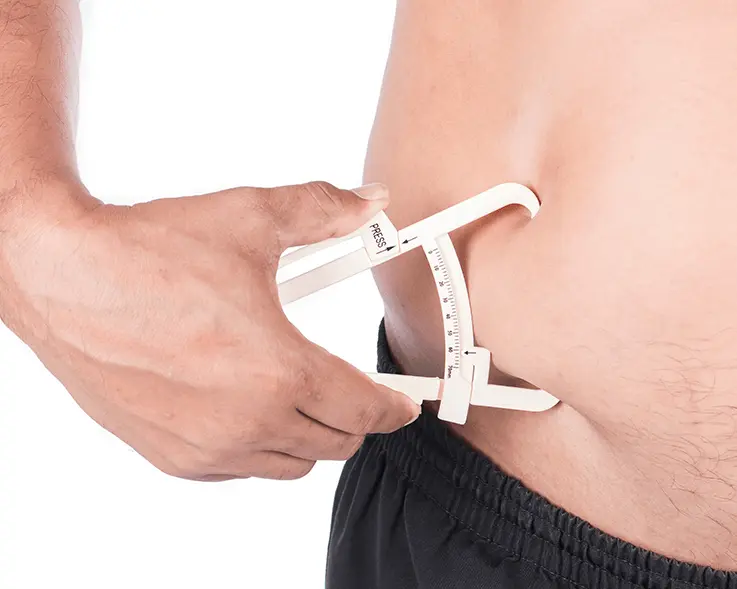
Skinfold Calipers
Skinfold calipers measure the thickness of subcutaneous fat, which is the fat underneath the skin, taken at specific sites on the body. This method is also known as the pinch test. As the name suggests, it involves pinching the subcutaneous fat layer with the fingers and measuring its thickness using a caliper. Calipers are easily portable, and the measurement process is simple and inexpensive. However, this method estimates total Percent Body Fat (PBF) based solely on subcutaneous fat. While a significant portion of body fat is subcutaneous, this method may be less accurate for individuals with varying fat distributions. Additionally, the measurement can be challenging if the subcutaneous fat layer is 5 cm or more in thickness, and the reproducibility of results can vary significantly depending on the skill of the person performing the test.

Hydrostatic Weighing
Underwater weighing calculates total body fat by determining body density. The process is based on the principle of buoyancy, known as Archimedes’ principle, which states that when an object is submerged in water, the difference between its mass in air and its mass in water equals the object’s volume. Underwater weighing requires specialized equipment, and the process can be uncomfortable for some individuals due to the need to be fully submerged in water and to exhale completely.
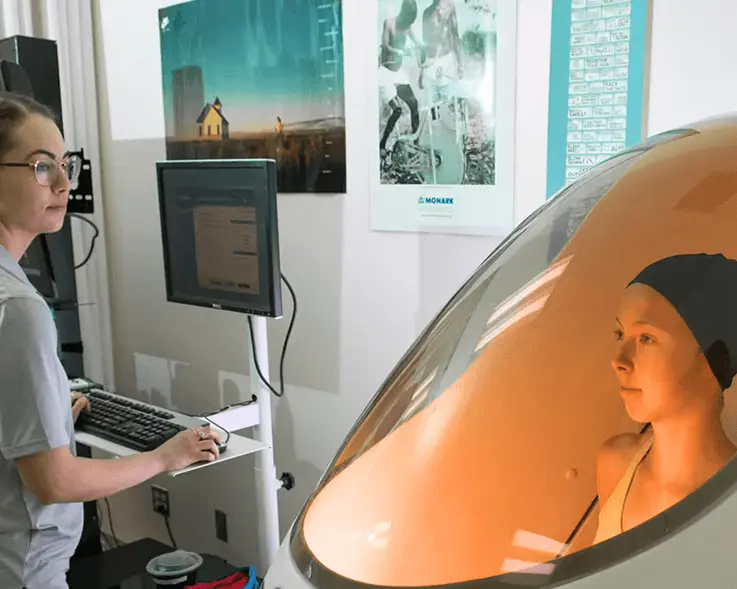
Air Displacement Plethysmography
Air Displacement Plethysmography (ADP) is a method to measure body fat and lean body mass by determining how much air your body displaces in a small chamber, like the “Bod Pod.” You just sit inside the chamber for a few minutes, and the machine calculates your body composition based on the air volume. The measurement takes 3-5 minutes, allowing the examinee to breathe normally in the chamber, unlike underwater weighing. The ADP system measures the volume of the chamber both with and without the person inside. By calculating the difference in air volume, the system determines the volume of the person’s body.
How Can BMI Be Misleading & Unreliable?
BMI (Body Mass Index)
Body Mass Index (BMI) is a popular method used to assess the health of an individual by comparing the amount of weight they carry to their height: BMI – kg/m2. Despite the widespread use of Body Mass Index in clinical practice, BMI has many limitation and is a poor tracking tool for weight change because there’s no way to identify if changes in your weight are in fat or muscle. Predicting health or mortality using a single number such as BMI oversimplifies health and ignores important factors that contribute to optimal health. When you set out to get healthier, you likely focus on losing fat and gaining muscle. The weight scale and BMI cannot tell you how much of your weight loss is fat, muscle or body water, but body composition can. Percent Body Fat (PBF) refers to the percentage of your total body weight that is composed of fat. This measurement is crucial for understanding overall health and fitness, as it provides insights beyond just body weight or BMI (Body Mass Index). A high PBF, especially in the abdominal area, can be linked to increased risks of chronic diseases such as heart disease, diabetes, and hypertension. Monitoring body fat can aid in the early detection and management of these risks. PBF offers a clearer picture of changes in body composition over time, which is useful for adjusting diet and exercise plans to target fat loss or muscle gain. For a healthy body fat level, aim for a PBF within 10–20% for males or 18–28% for females.
Percent Body Fat (PBF)
Percent Body Fat (PBF) refers to the percentage of your total body weight that is composed of fat. This measurement is crucial for understanding overall health and fitness, as it provides insights beyond just body weight or BMI (Body Mass Index). A high PBF, especially in the abdominal area, can be linked to increased risks of chronic diseases such as heart disease, diabetes, and hypertension. Monitoring body fat can aid in the early detection and management of these risks. PBF offers a clearer picture of changes in body composition over time, which is useful for adjusting diet and exercise plans to target fat loss or muscle gain. For a healthy body fat level, aim for a PBF within 10–20% for males or 18–28% for females.
How understanding your body composition can prevent health issues
Complications of Obesity
- Early mortality
- Cardiovascular disease
- Hypertension
- Diabetes
- Gallbladder disease
- Cancer
- Arthritis
- Back pain
- Pregnancy complications
- Menstrual abnormalities
- Shortness of breath
- Sleep apnea
- Increased LDL & triglycerides
- Decreased HDL
- Impaired heart function
- Impaired immune function
Complications of Low Body Fat
- Poor insulation
- Minimal energy stores
- Lack of cushioning for organs
- Poor cardiovascular function
- Prone to illness
- Poor recovery from exercise/illness
- Low testosterone
- Weak muscles
- Loss of bone density
- Amenorrhea
Complications of Low Muscle Mass (Sarcopenia)
- Frailty
- Starvation
- Poor insulin resistance/glycemic control
- Metabolic problems increase
- Osteoporosis
- Hormone dysregulation
- Low strength
- Higher risk of hospitalization/ hospital LOS