

Learn
InBody Technology
Advanced BIA technology refined through years of innovation. Learn more about what makes InBody different.
What is BIA Technology in InBody
Bioelectrical impedance analysis (BIA) is a method for measuring body composition, including muscle mass, body fat, and total body water. Alternating low and high-frequency electrical currents are sent through the water in the body via contact with electrodes to measure impedance.
History of BIA Technology
Dr. Hoffer and the Impedance Index
1969Proving that Total Body Water is Highly Correlated with Impedance
In 1969, Hoffer et al. conducted a series of experiments to prove that total body water and impedance were highly correlated, suggesting that impedance measurements could be used for determining total body water.
The impedance of the right half of the body was measured and yielded promising results—the squared value of this length measurement divided by impedance highly correlated with total body water (r = 0.92).

Commercialized Impedance Meter
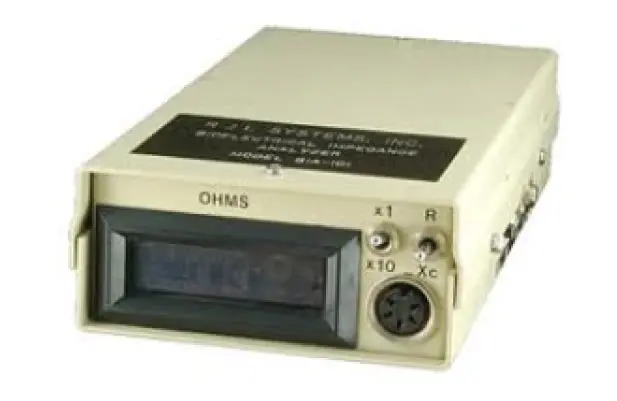
1979RJL Systems and the First Impedance Meter
In 1979, RJL Systems made the first commercialized impedance meter that helped popularize the BIA method. The device measured impedance using a 50kHz current applied to the right half of the subject’s body via electrodes attached to the back of the right hand and on top of the right foot.
Previous body composition methods like calipers or underwater weighing were uncomfortable, required skilled technicians to install or operate, and could not test a wide variety of populations. Alternatively, BIA was easy, fast, less expensive, and non-invasive, making it popular with many researchers, nutritionists, and medical experts.
Further Improvements for BIA
1980sDevelopment of Empirical Equations
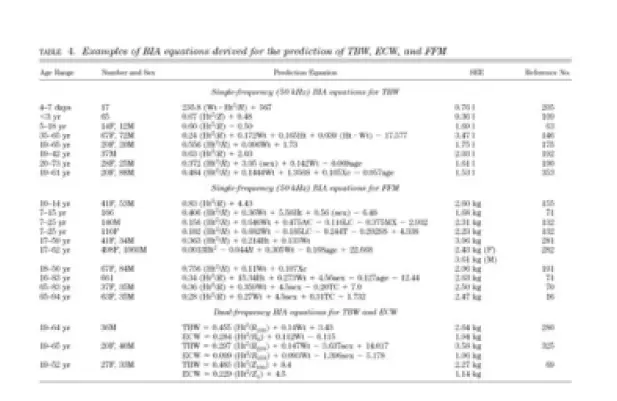
In the 1980s, studies proved BIA had high correlations with standard methods, such as underwater weighing and DEXA; however, some technical limitations began to surface. Two limitations of BIA were its assumption of the human body as a single cylinder and its use of a single frequency (50 kHz). This method might work for users with standard body types, but it was inaccurate for certain populations. To improve accuracy, researchers derived various population-specific equations based on empirical data such as age, sex, and physical activity level for determining body composition.
While empirical estimations may be reliable for generally estimating an individual’s body composition, there are significant problems when they are used for medical purposes. These empirical estimations may deliver inaccurate results and oversimplify health risks in populations like obese young individual.

Release of BIA devices
Late 1980sConsumer BIA Device
In the late 80s, Japanese manufacturers released several BIA devices for personal use, which gradually became more popular than professional medical models due to technological constraints mentioned earlier.
Some of these BIA devices were scales that measured the impedance between the user’s feet, while other models were handheld and measured the impedance between the user’s hands. Both types of models potentially produced inaccurate results because they measured the arms or legs directly and estimated everything else.
Improving BIA’s Technical Limitation
1992Kushner and the Proposal of Multi-Frequencies With Segmental Analysis
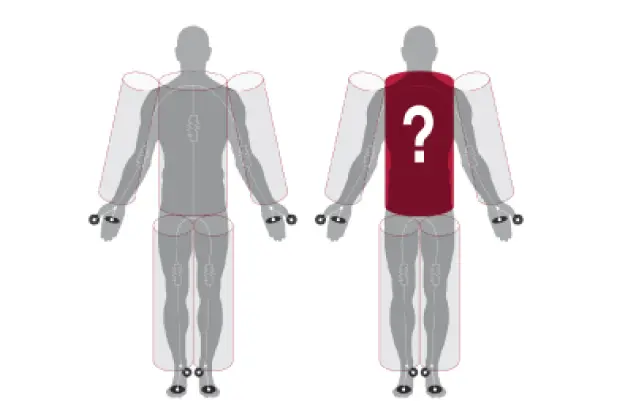
In 1992, Dr. Robert Kushner proposed that the technical limitations of BIA could be improved by measuring the human body as five separate cylinders instead of one. Each cylinder has a different length and cross-sectional area resulting in varying impedance values.
With the single-cylinder model, the thinness and smaller cross-sectional area of the limbs reduce their impact on whole-body impedance. However, since the torso makes up 50% of fat-free mass, it is crucial to measure the torso separately for accurate results. Kushner emphasized that it is crucial to measure the torso separately for accurate results.
World’s First 8-point Tactile Electrode System withDirect Segmental Analysis
1996Dr. Cha Creates the InBody Professional Body Composition Analyzer
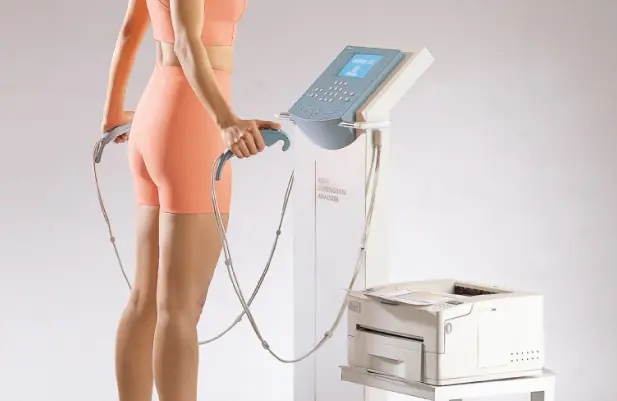
In 1996, Dr. Kichul Cha developed the world’s first 8-point tactile electrode system with direct segmental analysis to measure impedance in the five body cylinders using multiple frequencies (DSM-MFBIA technology).
Many BIA products provide segmental muscle and fat mass measures but not impedance, particularly in the torso.
The InBody device measured impedance in the limbs and torso separately, yielding highly accurate results without using empirical data based on age, sex, ethnicity, athleticism, and body shape. This innovative DSM-MFBIA technology makes the InBody a highly accurate and precise tool ideal for medical, fitness, and clinical applications.
Revolutionizing BIA Technology with InBody
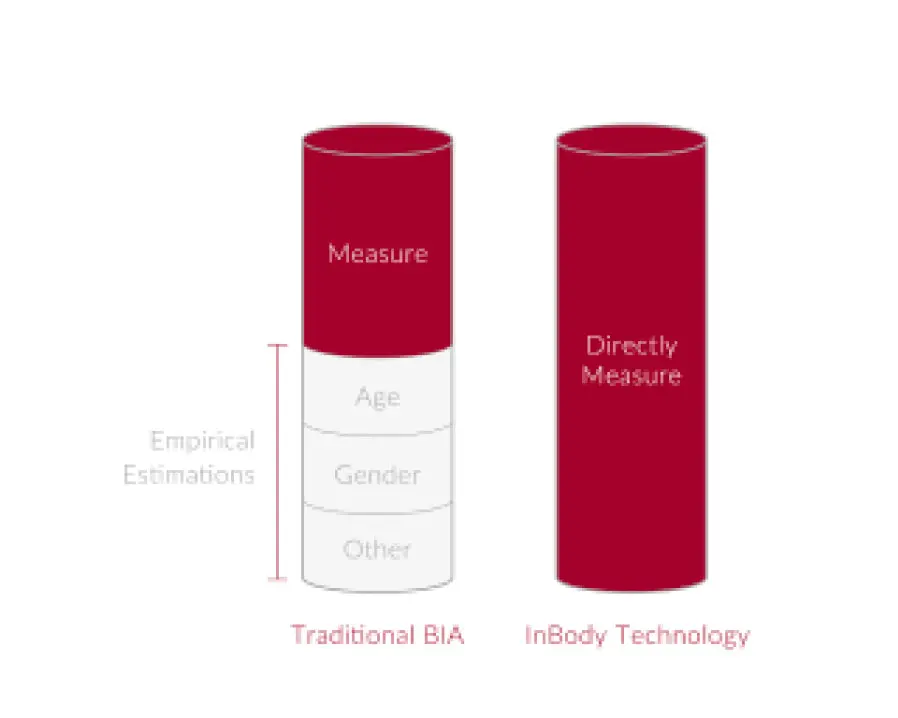
No Empirical Estimations
InBody measures your impedance independently, so your results are not affected by your age, sex, ethnicity, athleticism, or body shape.
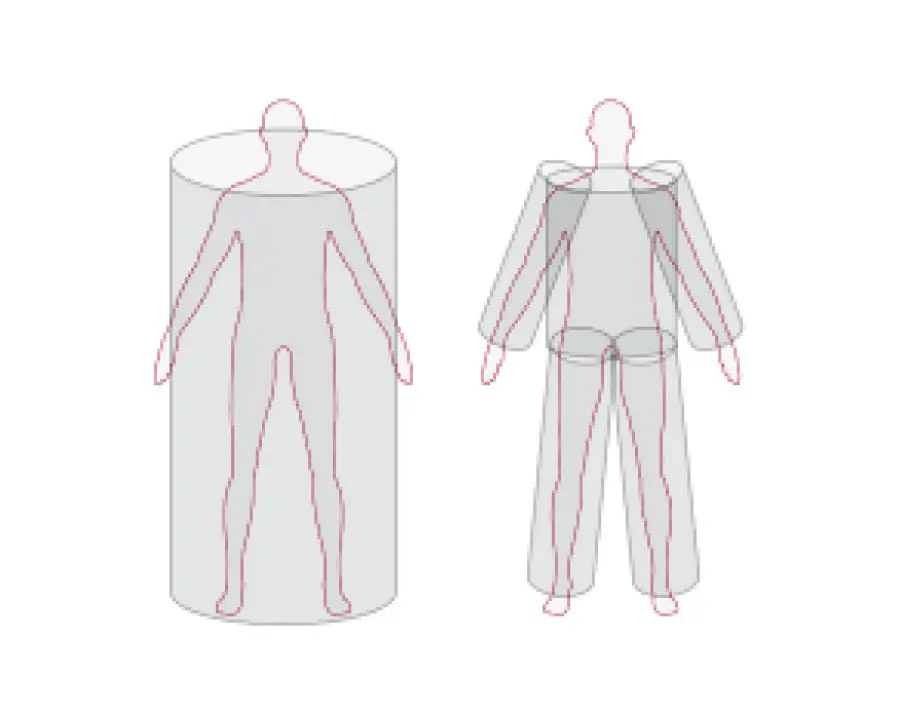
Direct Segmental Measurement
InBody measures each of the body’s five cylinders (left arm, right arm, torso, left leg, and right leg) to deliver accurate and detailed results.
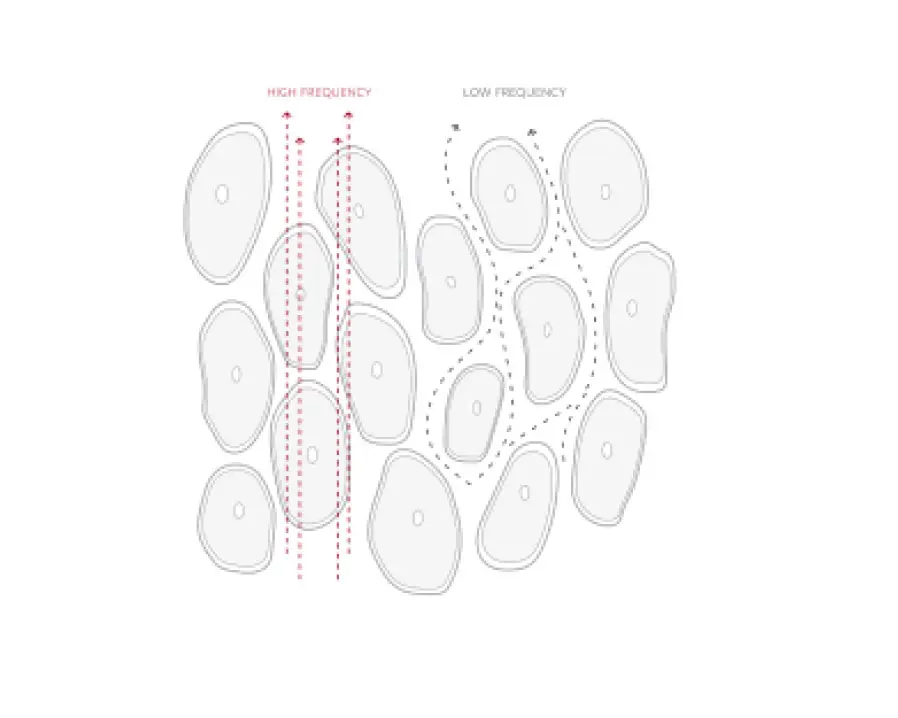
Multiple Frequencies
InBody uses multiple currents at varying frequencies to provide precise body water analysis.
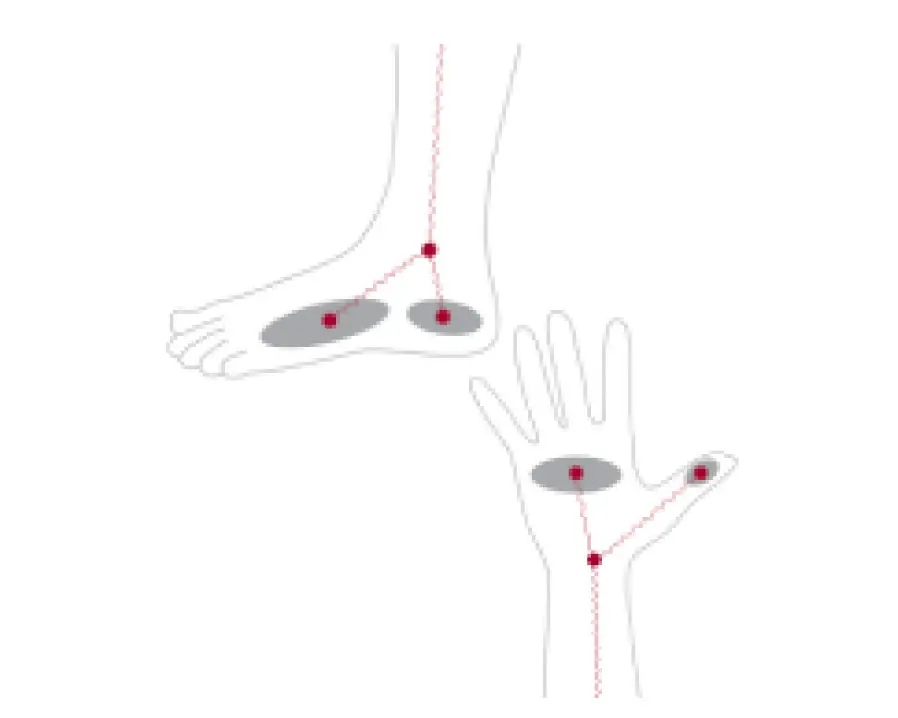
8-Point Tactile Electrode System with Thumb Electrodes
InBody accounts for contact resistance with strategically placed electrodes to ensure that measurements are accurate and reproducible.
Comparison between InBody's BIA and other BIA Devices
No Empirical Estimations
InBody Devices
InBody measures body composition without relying on empirical assumptions based on age, sex, ethnicity, or body shape, producing accurate and precise results validated to gold standard methods. Simply put, InBody provides individualized feedback for progress tracking to help you achieve your goals.
Other BIA Devices
Many BIA devices use empirical equations to compensate for technological flaws, including the lack of torso impedance (due to whole-body impedance measurement), single frequency measurements (which are unable to differentiate between water compartments), and lack of reproducibility (from electrode placement or positioning). These empirical equations utilize data, such as age, sex, and ethnicity, to calculate body composition based on common trends rather than relying solely on the individual’s actual body composition.
Direct Segmental Measurement
InBody Devices
Direct segmental measurement bioelectrical impedance analysis regards the human body as five cylinders: left arm, right arm, torso, left leg, and right leg. InBody independently measures each cylinder to provide accurate measurements for the entire body.
Other BIA Devices
Traditional BIA views the human body as one cylinder. However, the short length and large cross-sectional area of the torso mean that even a minor measurement mistake can lead to substantial error. For the most accurate results, BIA devices should measure the torso separately.
Multiple Frequencies
InBody Devices
InBody uses a combination of low and high frequencies to accurately determine extracellular, intracellular, and total body water. The use of multiple frequencies allows InBody devices to achieve a high level of precision. Medical practitioners can use InBody for measurements of body composition and fluid status.
Other BIA Devices
The ability to distinguish between extracellular and total body water is critical to identify fluid imbalances related to acute inflammation or edema. Many BIA devices use only one frequency at 50 kHz to measure impedance, which does not fully pass through the body’s cells and makes the accurate measurement of total body water impossible. As a result, patients with increased extracellular water may have overlooked health risks.
8-Point Tactile Electrode System with Thumb Electrodes
InBody Devices
The anatomical design of the InBody hand electrode creates a simple holding position that is easy to reproduce. When an examinee grasps the handle, current flows from the palm electrode, and the electrical energy, or voltage, is initiated at the thumb electrode. The point of measurement remains consistent for highly reproducible results.
Other BIA Devices
Many BIA devices lack a thumb electrode or have hand electrodes positioned close together. These designs can cause measurements to start in the palm, which has a high impedance and can cause inaccuracies or lead to inconsistent measurement starting points, reducing the reliability of results.
Technology You Can Trust
Our advanced BIA technology has been validated in over 6,300 clinical studies worldwide and proven amongst the most accurate. Compared to DEXA, InBody has a high correlation to the Gold Standard method for Fat-Free Mass and Body Fat Percentage in an ambulatory population.
View Validation Status